
by Izzy Sasada
An Indigenous Semaq Beri community in Terengganu is developing a tourism initiative entirely of their own choosing, based on sharing their traditional knowledge. Izzy Sasada provides an insight into this pioneering effort.
On an island in Kenyir Lake in Terengganu, Ishak bin Samad (known as Sahak) and his family are creating a tourism experience that for many, might not look much like tourism at all.
There are no boardwalks, no fixed itineraries, nor scheduled cultural performances. Instead, visitors are offered a window into the lives of a Semaq Beri community and their Indigenous knowledge systems.
The project, known as ‘Alam Liar’ and still in development on Pulau Alam Liar in Kenyir Lake, is a community-led tourism initiative. Visitors will learn directly from the Semaq Beri how to identify and find food in the forest, gather bamboo, travel by raft, and read landscapes beyond what a map can show.
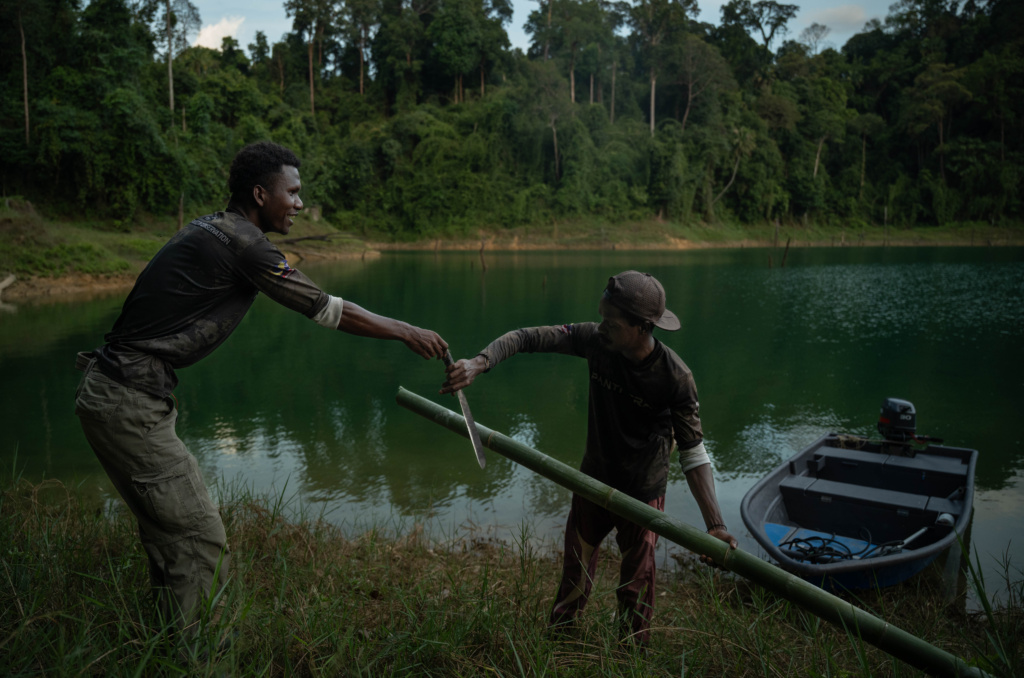
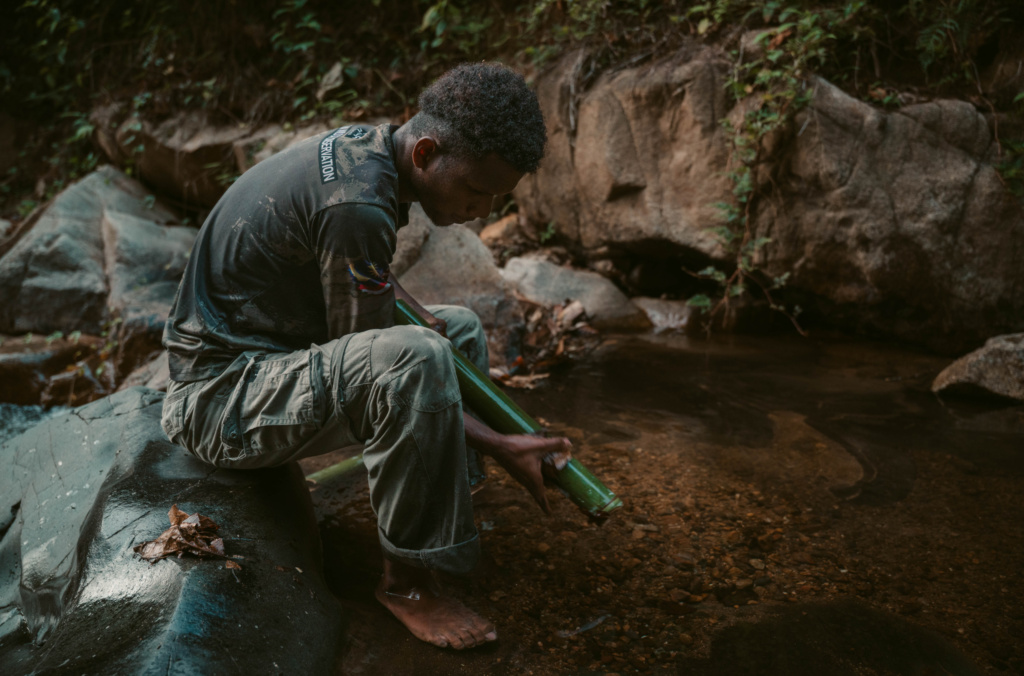
Members of the Semaq Beri group collect and wash bamboo from nearby islands. Later food will be cooked inside the bamboo over a fire.
The Semaq Beri are an Indigenous Orang Asli group belonging to the Senoi subgroup who primarily live across parts of Terengganu and Pahang. Traditionally semi-nomadic hunter-gatherers, they depend on the forest for food, medicine and shelter; moving through the landscape in search of forest produce, fish, and game.
Much of their intimate knowledge of the forests, from identifying edible tubers to harvesting honey and navigating forest trails, is passed down between generations. This knowledge is what they hope to share with outsiders through this new tourism initiative.
“I can’t stop thinking about my ancestors,” Sahak says. “How did they know to take poison from this tree? It doesn’t feel logical. How did they know the (sap from this) tree could kill this animal? That’s why I feel I must keep this alive.”
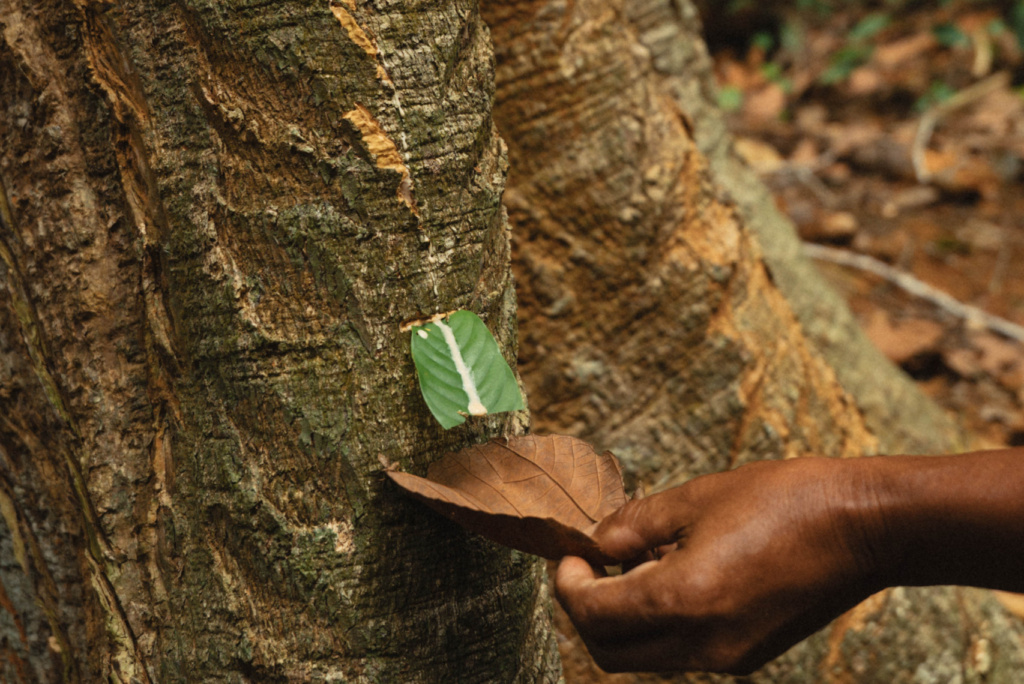
Left: Sahak uses a machete to remove poisonous sap from the Ipoh tree (Antiaris toxicaria), to be used for poison blowpipes to hunt animals.
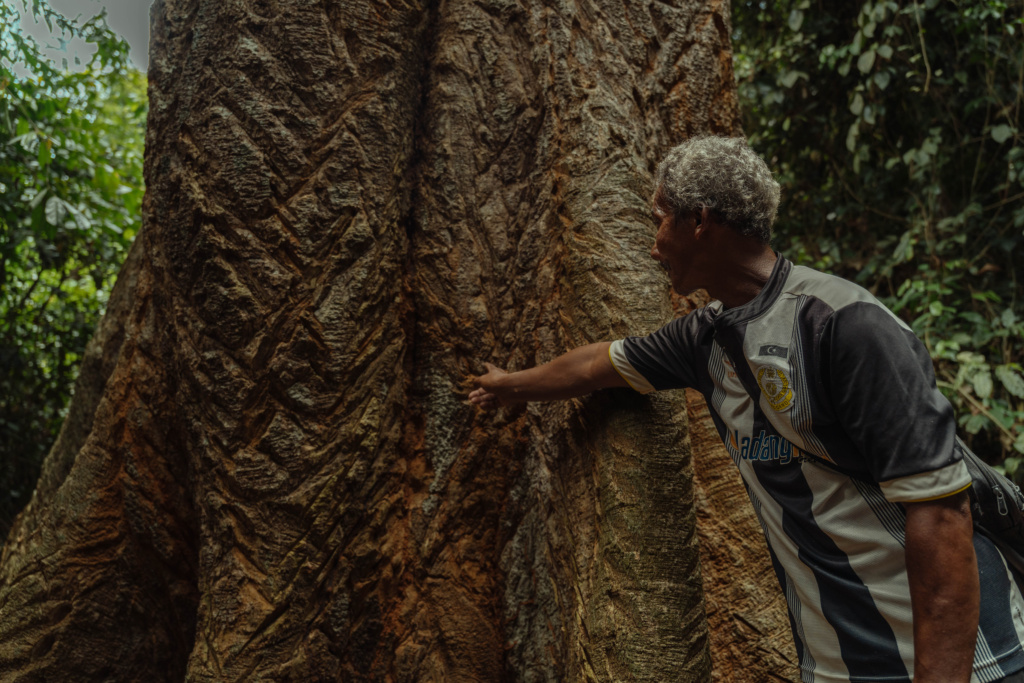
Right: Pak Samad points to cuttings on the bark, representing the years that his ancestors have sourced poisonous sap from this tree.
“My hope is that outsiders will know how we live, and I can share my experience with them,” he says. “It is quite a hard life that we live… but it’s actually a simple life.”
Adapting to a changed landscape
Kenyir Lake forms part of the Semaq Beri’s historic ancestral landscape. It is one of the largest man-made lakes in Southeast Asia, formed by the damming of several rivers between 1978 and 1985 to create the Sultan Mahmud Hydroelectric Power Plant.
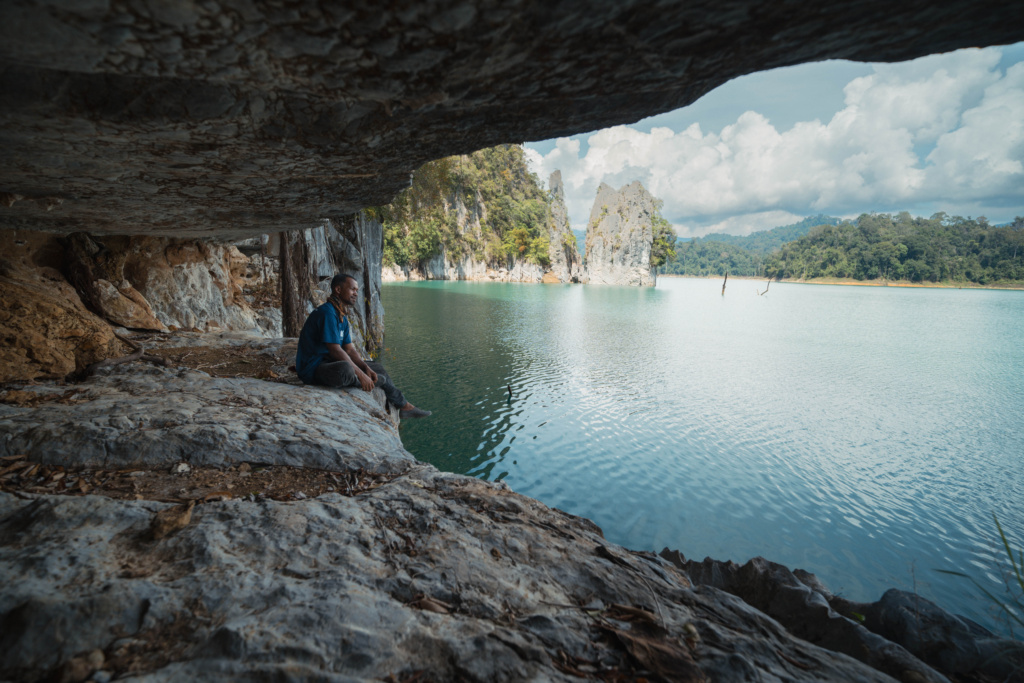
Sahaq sits on a cave mouth overlooking Lake Kenyir. The landscape changed dramatically after the man-made lake was created in the 1980s.
Many of the hilltops remained above water, creating 340 man-made islands—one of which is the island Sahak and his family are now repurposing for their tourism initiative.
Huts have been built to accommodate tourists, and a number of activities are already visitor-ready, since they are based on what the Indigenous community themselves are already doing.
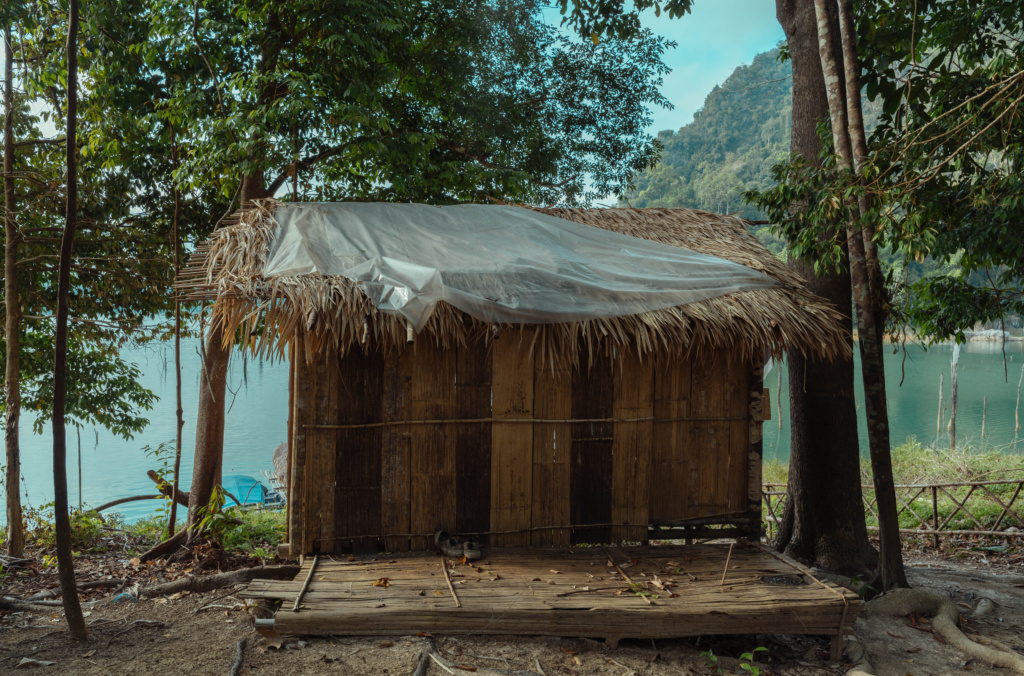
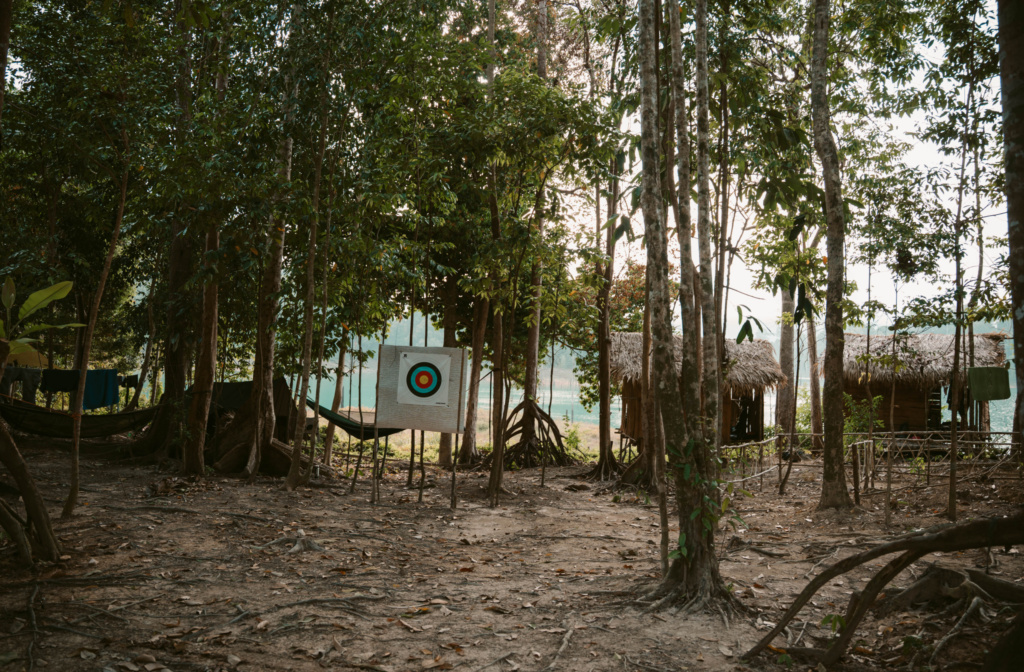
Visitors will sleep in recently constructed huts overlooking Kenyir Lake.
Sahak’s father, Pak Samad, remembers this area before the lake existed. Previously the Semaq Beri people moved through the forest on foot and along the river systems on man-made rafts.
“We used to be nomadic, moving around every few weeks,” says Sahak. “When the supplies finished, like potatoes in the ground, we had to move to another place.”
Developing tourism on their own terms
The activities Sahak wants to offer in this tourism package are rooted in their everyday knowledge, and unlike conventional tours, the overnight experience would not follow a rigid itinerary.
A two- or three-day stay might include night walks to look for insects, forest hikes to learn about medicinal plants, understanding Indigenous knowledge systems around fishing, cooking, rafting, collecting herbs or learning how to take honey from bees.
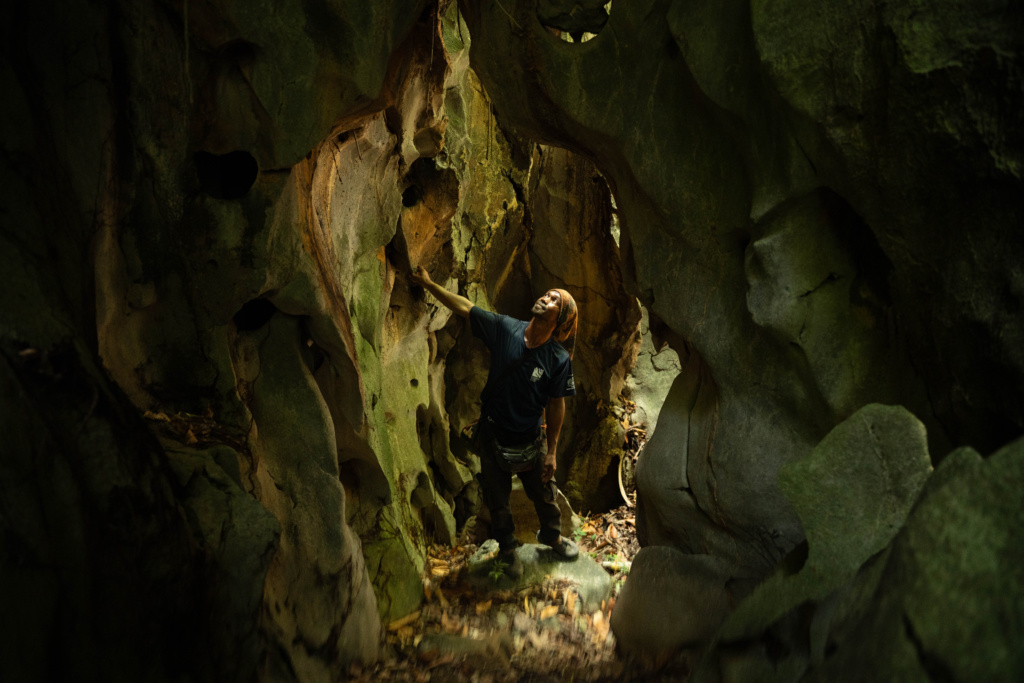
Sahak shows visitors a local cave system. Through guided walks of the islands, visitors can learn about cave systems and the local fauna and flora, which the Semaq Beri have extensive knowledge on.
“If people really want to experience their way of life, then the overnight comes in,” says Sri Venkateswara Rao, a Director of Nature-Based Solutions, one of the organisations supporting this project.
Apart from Nature Based Solutions, Alam Liar is also supported by numerous organisations including The Habitat Foundation, the Ministry of Finance and PERHILITAN. But crucially, the concept began with Sahak and his father, and the initiative is intended to be led by them and the wider Semaq Beri community.
“If you commit three days, you come in and do everything that they do. There is no fixed itinerary but you really experience what they’re doing,” says Sri.
That looseness is part of what makes the project unusual. Rather than asking Orang Asli guides to perform culture on demand, the Alam Liar experience is shaped around what the community is already doing.
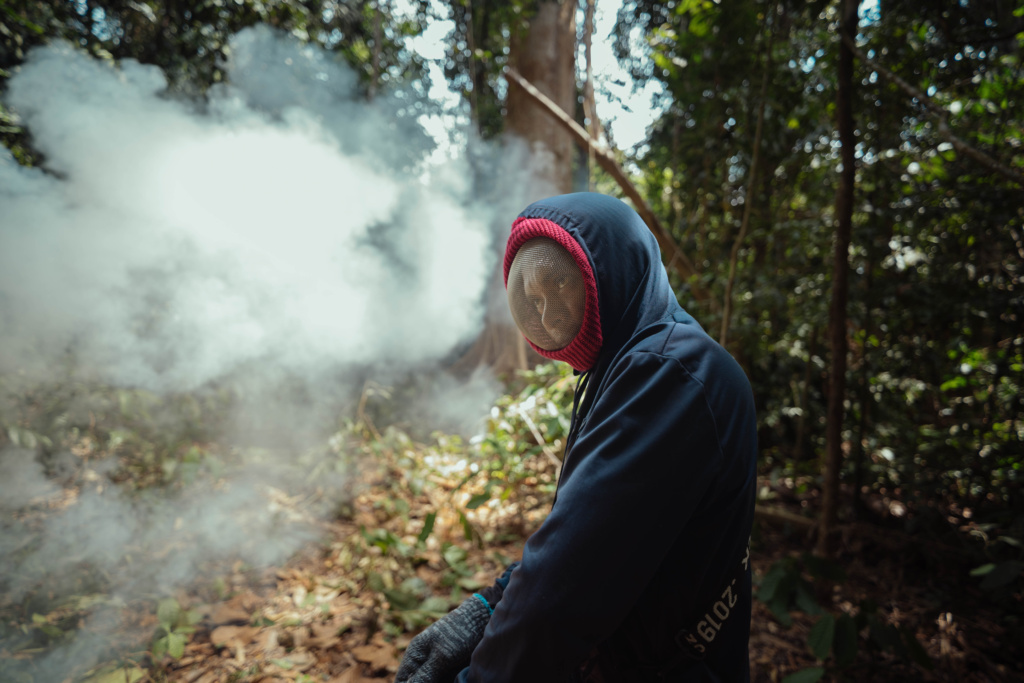
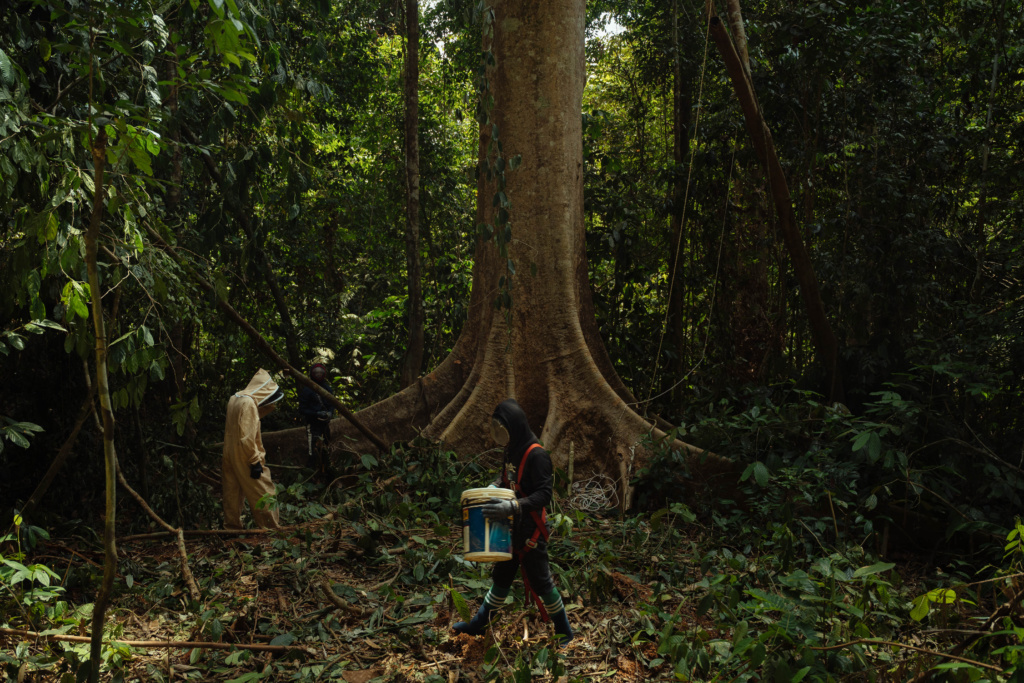
Left: A member of the Semaq Beri community dons a home-made ‘bee suit’ in preparation.
Right: An activity tourists might be able to witness is the honey harvest.
“In this tourism experience, the Orang Asli fit you into their schedule,” says Yohanna Yusrinal, a Senior Programme Executive at The Habitat Foundation, “not the other way round”.
Sri says this matters because many tourism encounters involving Indigenous communities are still designed from the outside. “Often, outsiders bring tourists and then pay the Orang Asli to do some sessions,” he says. “They don’t even have a say in how much to charge. The community may be paid very little.”
The difference with this project is that it was initiated by the community themselves and will be led by them.
“Someone from the community was interested to take ownership and start it, which is very unusual. We are just trying to see where we can assist,” says Sri.
The aim with this tourism project is also to build a model that provides additional income to the community. Forest products are not always reliably available, and this project would allow the community to access additional income whilst maintaining their traditional way of life.
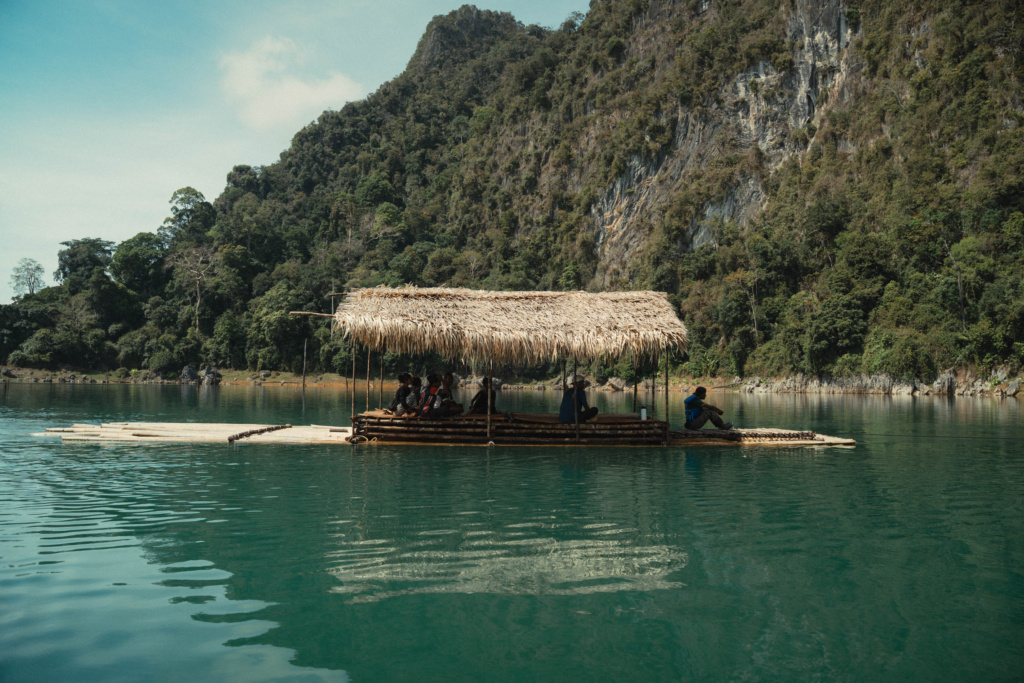
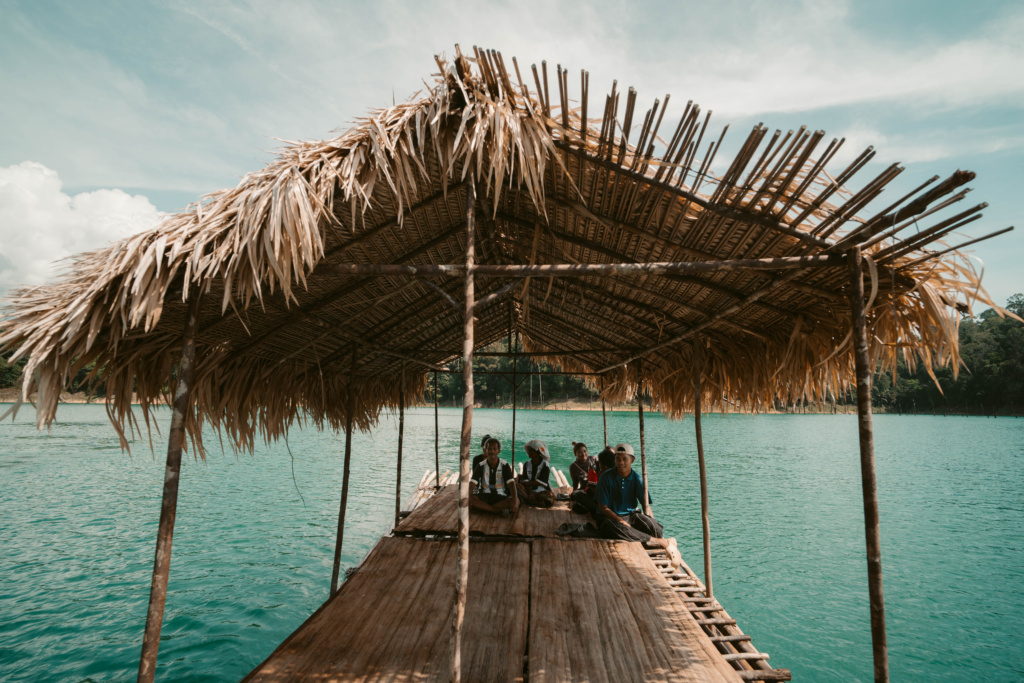
For the Orang Asli, rafting was traditionally a means of navigating the rivers and waterways. Today, visitors can experience this mode of transport on Kenyir Lake.
Enhancing local tourism opportunities
The hope is that Alam Liar can tap into the tourism already happening in Kenyir, particularly the houseboats that bring Malaysian families, fishing groups and visitors across the lake on weekends and holidays.
There are already dozens of houseboats operating in the area, each bringing groups of people who may want to add a cultural stop to their trip.
“They are the only Orang Asli in this part of Terengganu. If they can get a slice of the tourism already happening in their backyard, but on their own terms, that is already something,” says Sri.
For Sahak, this is a way to show outsiders his way of life, and to continue keeping this knowledge alive. There is so much he wants to share—which trees can provide poison for blowpipe darts, how tree bark was used to make clothing, why you do not wear perfume when collecting honey, and what to do when bees chase you.
Whilst the future may look different for his children, for Sahak it is important that this knowledge system remains. “Even if they work outside, I want them to continue our ways,” he says. “I will ask them not to forget.”
On Pulau Alam Liar, this project is still taking shape and will soon be open to the public.
For more on Alam Liar, please contact: alamliar1852@gmail.com
Photos provided by: Izzy Sasada